Date: 22nd October 2018

Date: 22nd October 2018

If you don't fight when you have a chance of victory, you will soon have to fight when you have no chance at all
Winston Churchill


Before starting with my "Why this book ?" question, I want to share with you a story that is mentioned in the book in page 111.  
Flexible Thinking Versus Rigid Thinking


"In 1952, Albert Einstein was teaching at Princeton University. One day, he was walking back to his office with his teaching assistant, who was carrying the copies of an examination that Einstein had just given to an advanced class of physics students.

The teaching assistant, a bit hesitantly, asked Dr. Einstein, "Excuse me for asking, but it's not the same exam that you gave to this same class of physics students last year?'

Dr. Einstein replied, "Yes, it is the same exam"

The teaching assistant then asked, even more hesitantly than before, "But how could you give the same exam to the same students, two years in a row?"
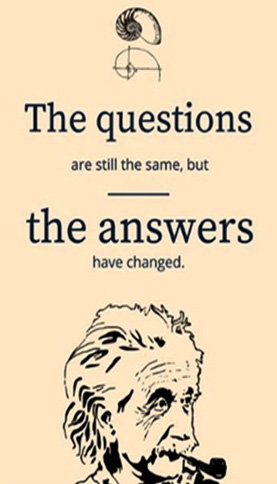
Einstein answered simply, "Because the answers have changed."

The lesson learned from this story and which can be applied to nowadays is: the business strategy that was previously working out successfully may not work out anymore. The "Road to Success" is the answer and the road has changed and will keep on changing, so we cannot continue following the same road. We need to cope with new changes to have the new right answer as "the answer has changed"!!!


It is not becoming a millionaire that is important. It is the kind of person that you must become in order to become a millionaire that is even more important
Jim Rohn
 
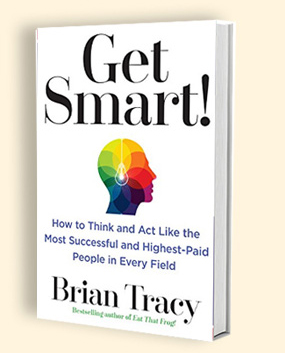
Why this book ?
1. My instinct:

At first, I was reading general business book with no focus on a subject or specialty. Then I don't know if it's a skill that we acquire when we become aggressive, hungry readers, worrying about life ending before finishing the reading list. The skill of knowing exactly what we really need and has to develop and for me it was self-improvement (and what falls under, above and around it) and public speaking.

2. The second part of the title of the book:

How to think and act like the most successful and highest-paid people in every field To get there, I believe that I need to know more about their secret, how did they make it? I want to be more successful and among the highest-paid in my field of work.

3. Brian Tracy is one of the best speakers in America and I would easily say in the whole world. With every book I read for Mr. Tracy I learn many new skills and techniques and that is not the only good part about it. I started applying what I am learning and to be honest it is working very well for me, paying off for all the time and effort I am giving.

One of my goals is to read every single book written by Mr. Tracy!


Thinking is the hardest work of all, which is why most people avoid it at all costs
Thomas Edison
 
Book Reading Strategic Plan

Couple years ago, I started my reading journey focusing on business books. I was reading a book or two per year. Beginning of 2017, I changed my reading pattern and decided to put a plan, I named it "Book reading strategic plan - 2017", I prepared the list, bought the books and managed to read ten whole books which for me was a big achievement taking into consideration the complexity of my work and personal life challenges and responsibilities.

During 2017 journey, I was preparing and working on my 2018 onwards list of books and the list now has sixty six different books out of which more than twelve has been read so far and another eight should be finished by the end of the year.

I was taking notes, pictures by mobile camera for pages that highly inspired, attracted, hit something inside me or made me feel that it can be reflected or applied in my work or personal life. Then, I decided to do what many had advised and recommended to do after reading a book:

- Try to summarize it in a page or two (or more if I have to)
- Share the lesson I personally learned from the book and post it on my website, so from now on expect a page or two (sometimes more) on every book I read.

It was page 48 and 192 that made me feel: yah, That's it! The message you are looking for is found, it says:

P. 48 "Several self-made millionaires were asked about the various reasons for success, they were asked what is success? The most successful of the group answered "Success is goal, and all else is commentary."

P. 192: "Most millionaires are intensely goal oriented. They have major definite purpose, one big goal, sometimes called a BHAG (Big Hairy Audacious Goal) that they think about and work on all the time. What is yours?

Without the willpower and discipline to engage in short-term pain for long-term gain, little success is possible.
Brian Tracy
 
Personal
implications
and
main lessons
learned

1. The average person uses only around 2% of his/her mental ability. Well that could sound as bad news, but I believe it should not be. The good news or just rephrasing the above could be: 98% is still there to be used and could have tremendous positive impact on our lives. This average person does not have to become someone different, just have to become all he/she is and unleash more of existing unused mental powers.

2. The primary job of the leaders, especially in business, is to think about the future. While making day-to-day decisions they project 5-10 years. Long-term thinking and planning can sharpen their perspectives and dramatically improves their short-term decision making.

3. Financial freedom: It is the point where you don't have to worry about the future financial burden and expenses. Think of "The Number" that is good enough that will help you achieve this goal, the financial freedom and work day and night towards it. There is a simple formula to calculate that: determine exactly how much it would cost for you to support your current lifestyle for one month if you had no income at all. More than 70% of adults have no answer or are unclear about this figure.

4. Practice solitude on a regular basis: Take 30 to 60 minutes by yourself, in silence, with no music or distractions. It will help relax your mind and unlock your subconscious and superconscious capabilities.

5. GOSPA Thinking Model: Goals, Objectives, Strategies, Priorities, Actions

6. Minimize distraction: as much as possible as it will improve your decision -making process and help you stay focused on what matters most. A small example of distraction is checking e-emails haphazardly and all day long; it is stated that the average person checks his/her email times 45 per day.

7. Law of "Cause and Effect": Simple law to apply and enjoy its benefits; If you do what successful people do (the cause), you will get the good results they got (the effect).

8. Develop a "Go-To-This-Person" reputation, top people develop the ability to complete bigger and bigger tasks that have more and more values.

9. Eliminate "Negative Emotions": To do that,
First, understand the roots of negative emotions which are: rationalization, justification, judgementalism, hypersensitivity.
Then, work on eliminating them.

10. Accept 100 Percent Responsibility: of everything you are and all that you will become in life, that's key to your self-esteem, self-confidence, self-reliance, and self-respect.

11. Zero-Based Thinking: it comes from Zero-Based accounting and it is when you ask not whether you should increase or decrease a certain expense but whether or not you should be spending any money in this area.

12. Avoid recovering "Sunk Cost": It is like throwing good money after bad.

13. The 7 R's of superior thinking: Rethinking, Reevaluating, Reorganizing, Restructuring, Reengineering, Reinventing, Regaining control.

14. CANEI Principle: Continuous And Never-Ending Improvement

15. Attitude: Many so-called geniuses had average or slightly above average intelligence. Genius or excellent thinking was instead more a matter of attitude and approach toward the inevitable challenges of life.

16. The Systematic Problem-Solving Method

1- Define the Problem clearly
2- What else is the problem
3- What else is the solution to our problem
4- Narrow down possible solutions
5- Determine how you will measure the success of this decision
6- Assign responsibilities for tasks and subtasks
7- Set a deadline
8- Develop plan B
9- Take action and move fast

17. Solution-Focused Thinking Versus Problem-Focused Thinking: Successful people think about solutions most of the time. Unsuccessful people think about problems most of the time.

18. Customer Service: Successful businesses single most important quality is "an obsession with customer service"

19. Lack of engagement: Many researchers found that more than 60% of employees at large and small companies are "disengaged"

20. Competitive Advantage: If you don't have it, don't compete or work hard and fast on developing one.

21. Reasons people do not get wealthy:

1. It never occurs to them
2. They never decide to do it
3. They procrastinate
4. They fear failure
5. They fear criticism and disapproval
6. They stop learning and growing
7. They lack persistence

22. Maintain health and energy:

1- Proper weight: Eat Less and Exercise More
2- Proper rest: Sleep as much as you can around the 8 hours each night
3- Proper exercise: On average exercise not less than 30 minutes each day

"Commitment is the key"

1-Entrepreneurial thinkers are different, they are committed to the success of the company. They are always:

1-Volunteering for more responsibilities
2-Thinking about making a greater contribution
3-Upgrading their skills
4-Learning new things
5-Seeking ways to become more valuable to their companies

2-Whatever you are doing today, you will have to be much more better a year from now to stay even in your current market and place.

3-If you want to make a lot of money, search for a big problem that a lot of people have and solve it in a new, efficient smarter way. And remember that one of the greatest secrets of becoming wealthy is to always do more than what you are paid for!!

Disclaimer
I am not marketing the book, whatever is mentioned in the article is purely my personal observations and opinion.